5 Business Processes You Can Automate with AI Today (and Stop Paying Monthly For)
Most businesses are paying monthly subscriptions for automation tools they could own once and run forever. Here are five processes where AI delivers the strongest ROI — and where the math on ownership becomes impossible to ignore.

58% of small businesses now use generative AI. That number jumped nearly 20 points in a single year. But here's the part nobody talks about: most of those businesses are renting their automation. They're paying monthly, forever, for tools they could own outright — and the bills add up fast.
Across five common business processes, a mid-size company running standard SaaS tools can easily spend $10,000 to $30,000 per month — $120,000 to $360,000 annually. That's not a technology investment. That's a liability that grows every time a vendor reprices their tiers.
The alternative exists. Custom AI solutions and pre-built AI apps can handle every process on this list. You pay once. You own it. Here's what the numbers look like across the five highest-impact areas for AI automation for small business.
1. Document Processing and Data Extraction
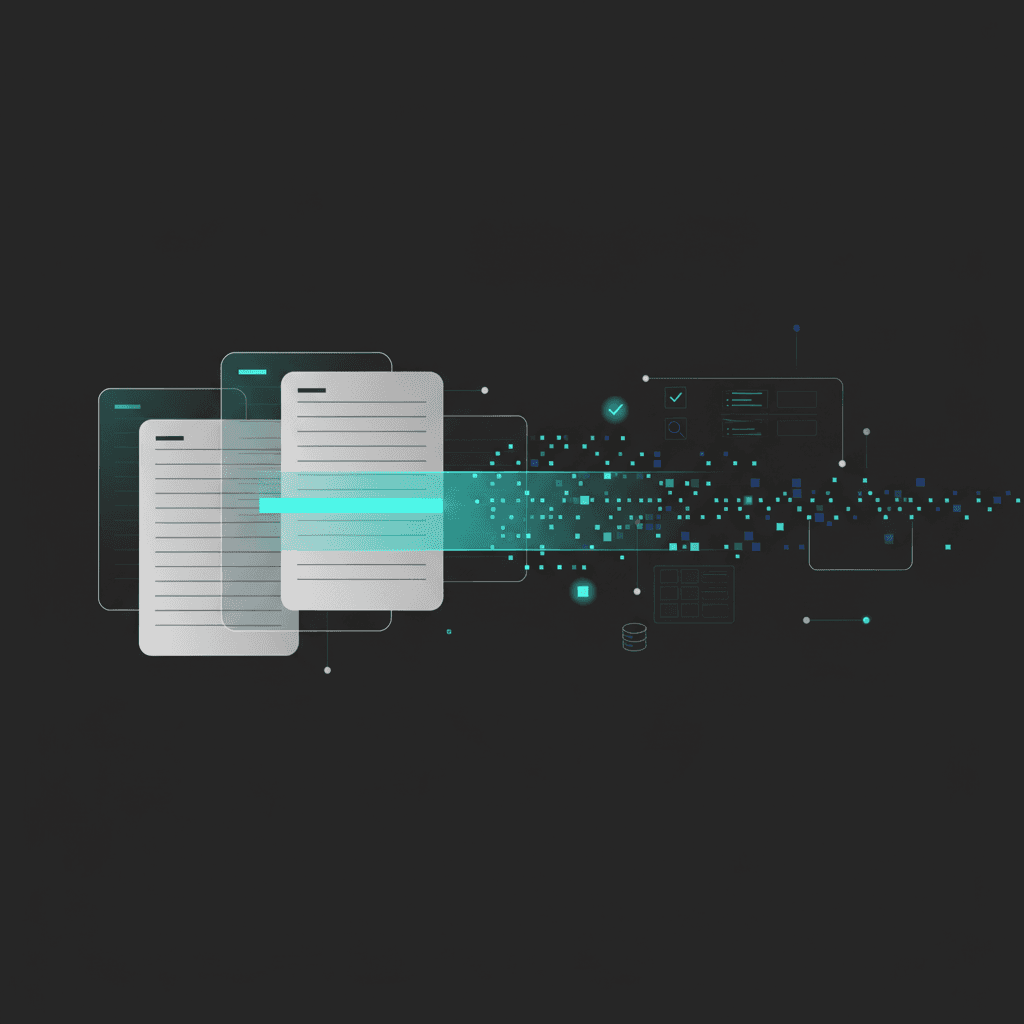
Manual data entry carries an error rate of 1–4% under normal conditions — and up to 40% when staff are under pressure. Automated document processing delivers 99.5–99.99% accuracy. That's an 8x improvement, minimum.
Despite this, 49% of finance departments still operate without any document automation. They're paying people to key in invoices, extract fields from contracts, and re-enter data across systems — work that intelligent document processing (IDP) handles in seconds.
What SaaS costs you:
- DocuSign: $25–65/user/month
- Enterprise IDP platforms (ABBYY, Rossum): custom quotes that routinely run five figures annually
What ownership looks like: A custom AI document pipeline processes your specific document types — invoices, contracts, intake forms, whatever your business actually uses. First-year ROI from labor savings alone typically runs 30–200%. One published case study reported a 74% reduction in processing time. The IDP market is projected to grow from $14B today to $91B by 2034 — the technology is mature, and the cost to own it has never been lower.
2. Competitive Monitoring and Market Intelligence
Sales teams go head-to-head with a competitor in 68% of deals. Yet 44% of companies have no competitor visibility integrated into their CRM. The average team rates itself 3.8 out of 10 at competitive selling — a gap that costs $2 million to $10 million per year in lost deals, depending on your revenue size.
Competitive intelligence tools exist to close that gap. The problem is the price.
What SaaS costs you:
- Crayon: $25,000–60,000+/year
- Klue: starts around $16,000/year, enterprise tiers reach $30,000–100,000
- SEMrush: from $140/month for limited data
What ownership looks like: An owned AI monitoring system crawls competitor websites, pricing pages, job postings, press releases, and review platforms on a schedule you set. It surfaces changes automatically and delivers summaries to your team. Companies using structured competitive intelligence see 12% higher revenue growth and close deals 28% faster. The information advantage is real — and it shouldn't cost you $50,000 a year to access it.
3. Customer Inquiry Handling
The average cost to handle a support ticket manually is $15–22. AI chatbots handle the same interaction at a fraction of that cost, with response times up to 97% faster. Top-performing AI support systems deflect 80–90% of tickets before they reach a human agent.
Conversational AI is projected to save $80 billion in contact-center labor costs by 2026. That's not a forecast about large enterprises — it includes businesses of every size that are finally replacing the "email us and wait 48 hours" experience with something customers actually prefer.
What SaaS costs you:
- Intercom Advanced + Fin AI: a 10-agent team runs approximately $2,970/month ($35,640/year)
- Zendesk Suite + AI add-on: $55–150/agent/month plus $50/agent for AI features
- Drift: starts at $2,500/month
What ownership looks like: A custom AI chatbot trained on your products, policies, and FAQs handles inquiries 24/7. It escalates edge cases to humans and logs every interaction for analysis. Average ROI on owned conversational AI runs 2–5x within the first year. A B2B SaaS company that shifted to an AI-first support model reported 60% higher ticket deflection. You're not renting a seat — you're building an asset.
4. Automated Reporting and Data Pipelines
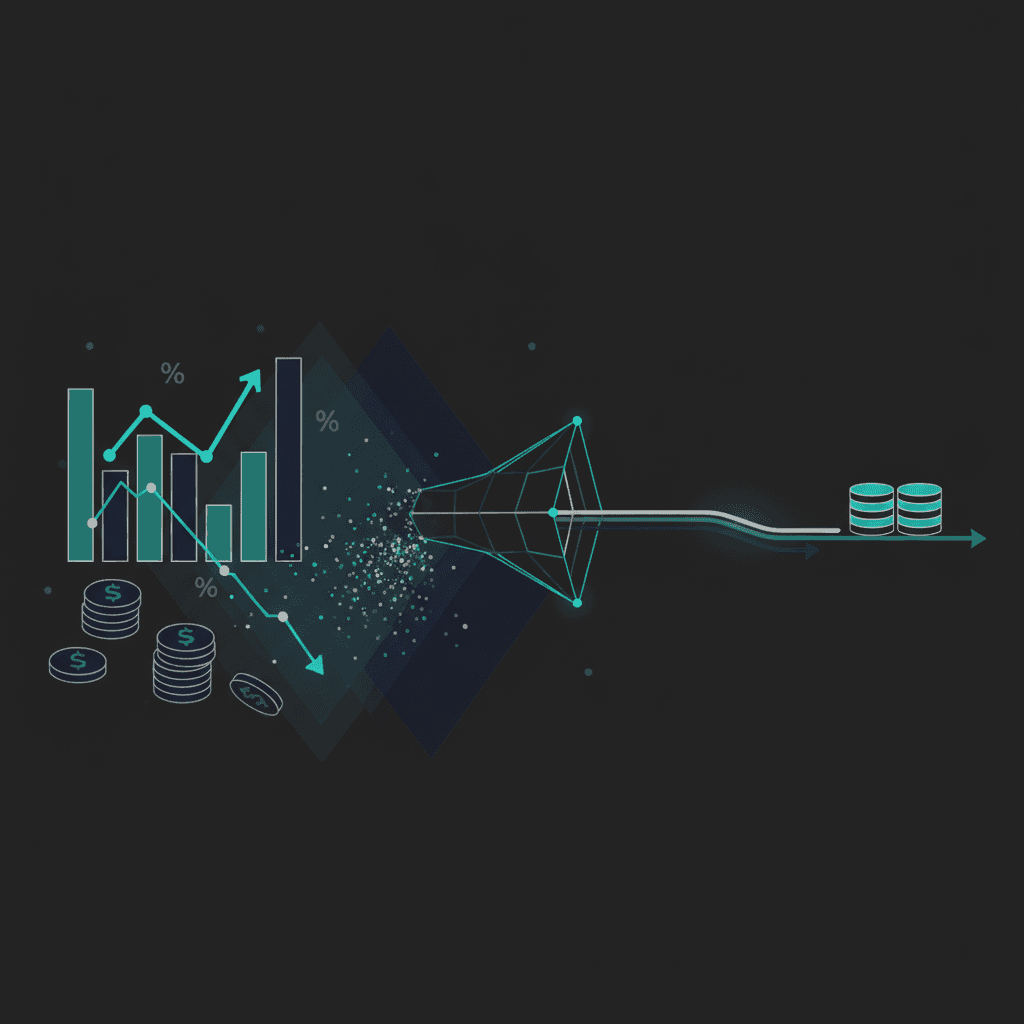
Data analysts spend 6–10 hours per week on manual reporting. In some organizations, junior team members spend 20–30 hours per week on data wrangling alone. Across teams, 60–80% of analytics time goes to gathering and formatting data rather than analyzing it.
The "modern data stack" — connectors, transformation layer, BI tool — solves this. But the SaaS version has become extraordinarily expensive.
What SaaS costs you:
- Fivetran: $1,000–5,000+/month (pricing increased 40–70% after 2025 billing changes)
- dbt Cloud: $100–350/user/month
- Looker: starts around $5,550/month ($66,000/year) at the entry tier
- A full modern data stack: $3,000–15,000+/month
What ownership looks like: An owned data pipeline connects your sources, transforms data on your schedule, and pushes clean outputs into whatever reporting layer you use. Automation reduces reporting time by roughly 80% — from six hours to around 30 minutes per week for most teams. Nearly 60% of workers estimate they'd save six or more hours per week if repetitive data tasks were automated. Own the pipeline and those hours come back permanently.
5. Predictive Maintenance and Monitoring Alerts
Unplanned downtime costs an average of $260,000 per hour across industries. In automotive manufacturing, that number reaches $2.3 million per hour. Reactive maintenance costs 4–5 times more per repair than predictive maintenance — and it's entirely avoidable.
The US Department of Energy puts the ROI on predictive maintenance at 10:1. Ninety-five percent of organizations that adopt it report positive ROI. Twenty-seven percent achieve full amortization within the first year.
What SaaS costs you:
- Datadog Pro: $15–18/host/month; Enterprise with APM: $23–27/host plus $31/host for APM
- A mid-size deployment of 50–100 hosts with APM and log management: $5,000–15,000/month
- PagerDuty: $29–49/user/month on top of your monitoring tool
What ownership looks like: An AI monitoring system watches your equipment, infrastructure, or operational metrics and fires alerts before failure — not after. It learns your baseline, identifies anomalous patterns, and can trigger automated responses for predefined conditions. Companies using predictive monitoring see 70–75% fewer equipment breakdowns and up to 50% less downtime in the first year. That's not a marginal improvement — it's a structural change to your operating costs.
The Business Case for Owning Your Automation
Running all five of these processes on standard SaaS tooling costs $10,000–30,000 per month for a mid-size business. That's $120,000–360,000 per year in recurring spend, with no equity, no control over pricing, and no guarantee the feature set you depend on stays available at your tier.
Owned AI changes the math entirely. At a custom build cost of $5,000 and a pre-built app starting at $500, the breakeven point on most of these solutions is measured in weeks — not years. The underlying technology — the same models and frameworks powering the SaaS tools you're currently renting — is accessible without the subscription attached.
For every $1 invested in AI, companies see an average return of $3.70. Top performers see $10.30. Those returns don't materialize because businesses subscribed to the right tools. They happen because someone made a decision to stop renting and start building.
If any of these five processes looks like your business, the question isn't whether AI automation works. The data on that is settled. The question is whether you want to keep paying monthly for it indefinitely, or own it outright.
Intraverse AI builds custom AI solutions starting at $5,000, delivered in 2–4 weeks. Pre-built apps start at $500. If you want to see what an owned solution for any of these processes would look like for your specific operation, reach out and we'll walk through it.